



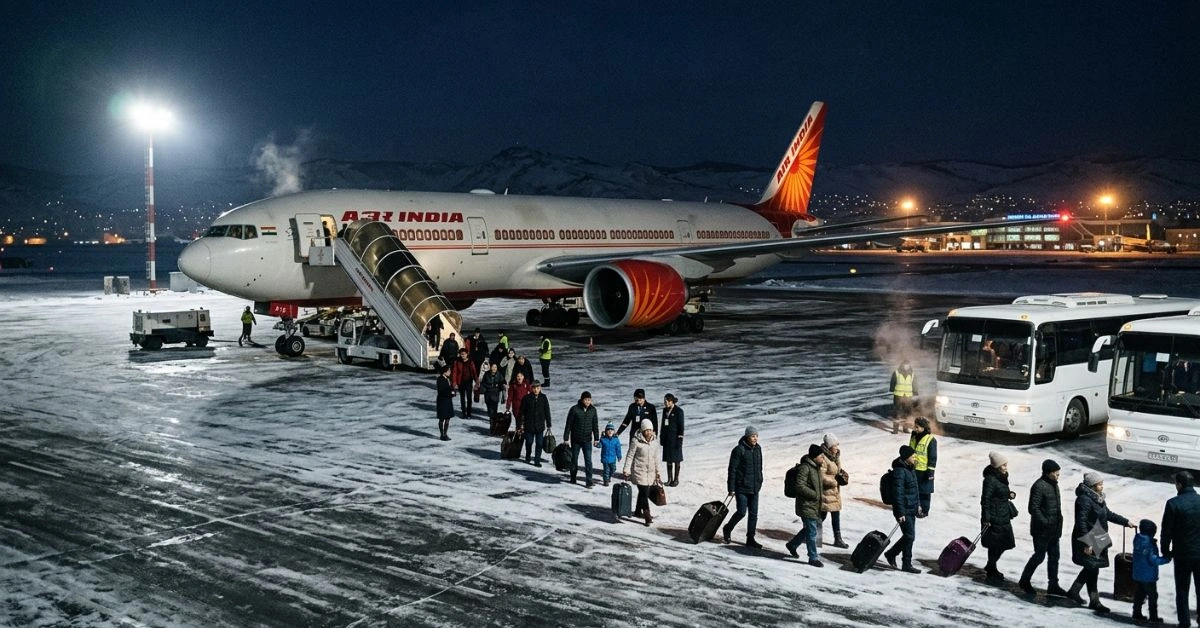
On November 2, 2025, Air India flight AI 174 lifted off from San Francisco International Airport bound for Delhi via Kolkata. What started as a routine long-haul journey turned into an unexpected ordeal when the Boeing 777-300ER crew detected a potential technical issue roughly 11 hours in. The pilots made the call to divert to Ulaanbaatar, Mongolia. All 228 passengers and 17 crew members landed safely, but the events that followed exposed cracks in handling remote diversions and left travelers grappling with freezing conditions and prolonged uncertainty.
This incident with the AI 174 flight quickly drew global attention, highlighting the realities of operating ultra-long-haul routes amid geopolitical airspace restrictions and the challenges airlines face when things go wrong far from home bases. As someone who’s tracked aviation stories for years, I’ve seen how these events ripple through passenger trust, operational protocols, and industry standards. This deep dive unpacks every verified detail, the human impact, and broader implications.
What Is Air India Flight AI 174?
AI 174 serves as one of Air India’s key transpacific connections, typically flying the San Francisco (SFO) to Delhi (DEL) route, often with a technical or passenger stop. Due to ongoing Pakistan airspace closures since April 2025, the flight reroutes via Kolkata or other points, stretching the total duration close to 16-20 hours depending on winds and stops.
The aircraft is usually a Boeing 777-300ER, a workhorse for such distances with capacity for around 300-350 passengers in a typical three-class setup. On this particular November 2 departure, the load included families, business travelers, and at least one infant, making the diversion especially taxing for vulnerable passengers.
Routine for many, these flights represent major lifelines for the Indian diaspora and business connections between the US West Coast and India. But the AI 174 flight incident showed how even well-planned operations can hit unforeseen snags in remote airspace.
Timeline of the AI 174 Flight Incident
- Departure: November 2, 2025, afternoon local time from SFO (around 2:25 PM or later reports of 3:07 PM PT equivalents). The flight carried approximately 245 people total.
- Cruising Phase: About 11 hours into the flight, over or near Mongolian airspace, the crew noticed a suspected technical issue—passenger accounts and reports pointed to an oil-related problem on one engine or system.
- Diversion Decision: Pilots acted decisively, initiating descent and landing at New Ulaanbaatar International Airport (UBN) within about 45 minutes of identifying the issue.
- Landing: Safe touchdown on November 3 (local timing adjustments). No injuries reported.
- On the Ground: Passengers remained aboard the aircraft for roughly three hours before disembarkation. Indian Embassy staff in Mongolia worked quickly to arrange on-arrival visas for the entire group.
- Stranding Period: Buses transported passengers to hotels (including Holiday Inn) around 2 a.m. local time. Temperatures hovered around -7°C (19°F), leading to discomfort as people dragged luggage short distances in the cold. Meals were basic, and coordination felt disorganized to many.
- Relief Efforts: Air India arranged a relief flight. On November 5, 228 passengers and crew reached Delhi after being ferried out.
The entire episode stretched over 60 hours for some from original departure to final arrival, turning a long flight into a multi-day saga.
The Technical Issue: What Went Wrong?
Details on the exact fault remain somewhat limited in public statements, as Air India cited “suspected technical issue” and focused on checks. Passenger reports mentioned an oil-related anomaly, possibly tied to engine monitoring systems. The Boeing 777-300ER has robust redundancy, but crews are trained to divert proactively rather than risk escalation.
Aviation experts emphasize that precautionary landings like this demonstrate sound decision-making. Better a safe diversion than pushing onward with uncertainty. However, the remote location amplified logistical challenges—no Air India base in Mongolia meant reliance on local partners and embassy support.
This event ties into larger discussions on aviation governance and oversight, especially for carriers expanding international footprints. For deeper context on systemic challenges in tech-driven transformations and safety protocols, see perspectives on governance in digital and operational shifts.
Passenger Experiences: Panic, Cold, and Resilience
Stories from those aboard paint a vivid picture. One woman recounted waking to a loud sound on the left side, grabbing her infant tightly as the plane shook during descent. Others described initial panic followed by relief at the smooth landing.
On the ground, conditions tested everyone:
- Freezing Wait: Hours on the tarmac before buses.
- Hotel Ordeal: Late-night transfers in sub-zero temperatures. Elderly passengers struggled; some bought extra clothing the next day.
- Food and Care: Minimal meals initially. Hotel staff tried but were stretched.
- Communication: Families back home worried as updates trickled in slowly.
- Families Hit Hardest: Toddlers and infants faced disrupted routines in an unfamiliar, cold environment.
A passenger account from Mohit Gupta detailed the oil issue, quick landing, visa miracles by embassy staff, and frustrations with ground handling. Despite hiccups, many praised the crew’s composure and eventual resolution.
These accounts humanize the data points and explain why such incidents linger in public memory.
Air India’s Response and Recovery
Air India issued statements emphasizing safety as the priority and regret for inconvenience. They coordinated with local authorities, arranged hotels, and dispatched a relief aircraft. The original plane underwent technical inspections.
Critics pointed to delays in relief arrival and initial ground support gaps. Air India, under Tata Group ownership, has invested heavily in fleet modernization and service improvements, but remote incidents reveal vulnerabilities in global contingency networks.
The successful ferrying of all passengers by November 5 marked a positive close, though trust repair takes longer.
Broader Impacts on Air India and Long-Haul Operations
The AI 174 flight diversion spotlighted route planning pressures from airspace restrictions. Rerouting around Pakistan adds hours and fuel costs, increasing exposure to mechanical risks over vast distances.
Industry-wide, it reinforces needs for:
- Stronger partnerships in remote regions.
- Enhanced passenger welfare protocols for diversions.
- Transparent communication during crises.
For travelers, it underscores checking airline contingency plans, travel insurance covering delays, and packing essentials like medications and warm layers for long flights.
Comparison of AI 174 Incident with Similar Aviation Diversions
| Aspect | AI 174 (Nov 2025) | Qantas Flight 72 (2008) | British Airways 38 (2008) | Typical US Domestic Diversion |
| Aircraft | Boeing 777-300ER | Airbus A330 | Boeing 777-200ER | Various (e.g., 737) |
| Cause | Suspected oil/technical issue | In-flight computer malfunction | Engine icing | Weather/mechanical |
| Passengers/Crew | ~245 | 315 | 152 | 100-200 |
| Diversion Location | Ulaanbaatar, Mongolia (remote) | Indian Ocean (emergency landing) | London Heathrow | Nearby US airport |
| Stranding Duration | 2-3 days | Hours | Short | Hours to 1 day |
| Injuries | None | 119 minor | None | Rare |
| Resolution | Relief flight from India | Continued after checks | Investigation-led fixes | Quick recovery |
| Media/Public Impact | High (passenger stories) | Very high (automation fears) | High (fuel system) | Moderate |
This table shows how the AI 174 stood out due to its remoteness and extended disruption, despite no injuries.
Lessons Learned and Safety Improvements
Incidents like this drive incremental changes. Airlines review diversion airports, stock emergency supplies better, and train for cold-weather remote operations. Passengers gain awareness: power banks, snacks, and patience prove invaluable.
Air India’s ongoing modernization, including new aircraft and tech upgrades, aims to reduce such events. Reliable software stacks and automation tools play growing roles in predictive maintenance—exploring options like full-stack app builders for operational efficiency can support backend systems.
Comprehensive FAQS on the AI 174 Flight
1. What exactly caused the diversion of AI 174?
Reports indicate a suspected oil-related technical issue detected mid-flight. The crew followed protocol with a precautionary landing rather than continuing.
2. Were there any injuries or dangers during the AI 174 landing in Mongolia?
No. The landing was safe, and all passengers and crew remained unharmed. Initial panic subsided quickly.
3. How long were passengers stranded in Mongolia after the AI 174 diversion?
From landing on November 3 to relief flight arrival and departure, the ordeal lasted over 48-60 hours for most, including hotel stays.
4. Did Air India compensate passengers affected by the AI 174 incident?
Standard policies apply for delays and diversions, including meals, hotels, and potential rebooking compensation under international rules. Specific claims details emerged case-by-case.
5. Has the AI 174 route changed since the incident?
The flight continues operating with the established reroute via Kolkata or alternatives. Air India enhanced monitoring and contingency planning.
6. What should I do if my long-haul flight diverts unexpectedly?
Stay calm, follow crew instructions, contact family via any available Wi-Fi, and document everything for claims. Travel insurance helps significantly.
7. Is Air India safe for long-haul flights like AI 174 after this event?
Yes. The incident highlighted proactive safety decisions. Air India’s safety record aligns with industry standards, bolstered by Tata Group investments.
Why the AI 174 Flight Story Matters for Travelers Today
This wasn’t a catastrophe, but a managed emergency that tested systems and people. It reminds us that aviation safety relies on layers—pilot judgment, maintenance, ground support, and international cooperation. For anyone booking similar routes, understanding these realities builds better preparedness.
The safe resolution of the AI 174 flight diversion ultimately reinforced confidence in crew training while exposing areas for logistical refinement. As global travel rebounds, stories like this shape expectations and push continuous improvement.
For More Information Visit Aitrender.