



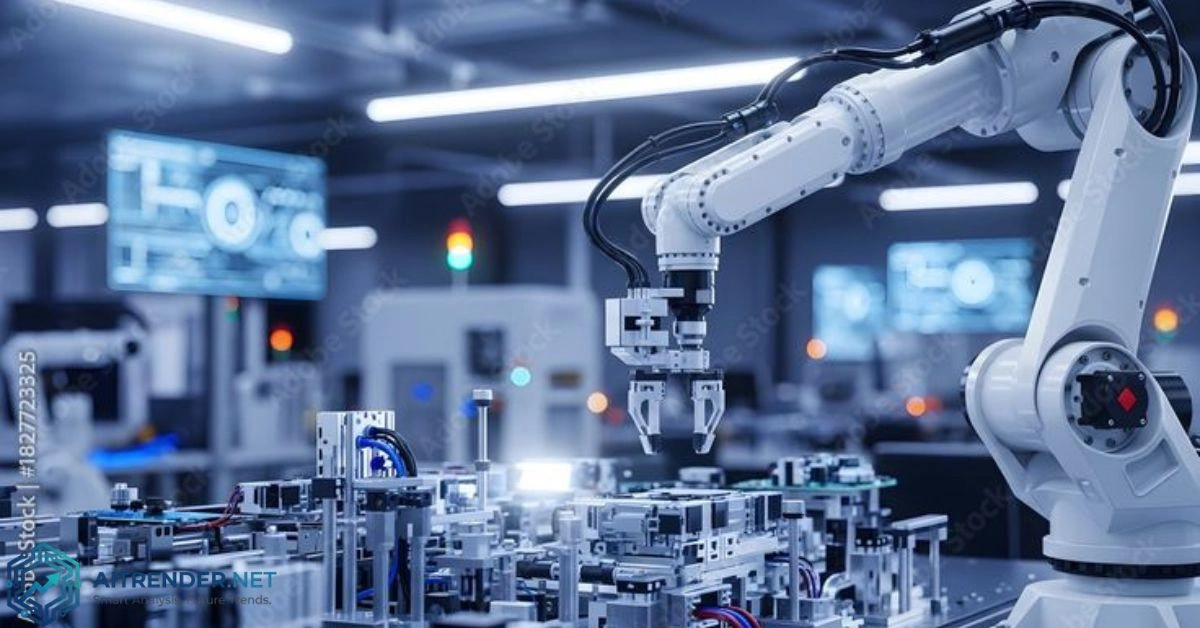
Automated machines have quietly reshaped how work gets done for over two centuries. From the clanking looms of the Industrial Revolution to today’s AI-guided robotic arms assembling smartphones in seconds, these systems handle tasks with speed, precision, and consistency that humans struggle to match over long shifts.
The core idea behind an automated machine is simple: equipment or software that performs operations with minimal ongoing human input once set up. This covers everything from a basic thermostat adjusting room temperature to complex factory lines where raw materials enter one end and finished products exit the other with little human touch in between.
What sets modern automated machines apart is the blend of mechanical hardware, sensors, control systems, and increasingly sophisticated software. They don’t just repeat actions—they often monitor conditions, make adjustments, and even learn from data. This evolution matters because it directly affects productivity, safety, product quality, and the nature of human jobs across sectors.
This article breaks down the mechanics, main types, proven applications, and honest trade-offs of automated machines. You’ll see concrete examples rather than hype, plus practical insights for anyone encountering or considering these systems.
A Brief History of Automated Machines
The roots of automation trace back further than most realize. In the 18th century, inventors created devices like water-powered mills and mechanical looms that reduced manual labor in textiles. Oliver Evans built an automated flour mill in 1785 that moved grain through the entire process without constant human oversight—one of the earliest fully continuous automated industrial setups.
The real acceleration came during the 20th century. Henry Ford’s moving assembly line in the early 1900s mechanized car production, though it still relied heavily on workers. The term “automation” itself emerged around 1946 at Ford, credited to engineer D.S. Harder, as the company ramped up automatic controls on production lines.
Post-World War II, programmable logic controllers (PLCs) and early robots entered factories. The 1960s and 1970s saw Unimate, one of the first industrial robots, handling die-casting and welding at General Motors. By the 1980s and 1990s, computer numerical control (CNC) machines became standard in machining, allowing precise, repeatable cuts based on digital instructions.
The digital era pushed things further. Sensors, actuators, and software enabled feedback loops—machines could detect errors and correct them in real time. Today, integration with artificial intelligence allows some automated machines to handle variability and decision-making once reserved for skilled operators.
This progression wasn’t linear or inevitable. Economic pressures, labor shortages, and technological breakthroughs drove adoption at different paces across industries and regions.
Core Mechanics: How Automated Machines Operate
At their foundation, automated machines combine several key elements:
- Mechanical Systems: Arms, conveyors, grippers, or other physical components that perform the actual work.
- Sensors: Devices that gather data on position, temperature, pressure, vision, or other variables.
- Controllers: Brains of the operation—PLCs, microcontrollers, or industrial computers that process sensor input and issue commands.
- Actuators: Motors, pneumatic or hydraulic systems that translate commands into physical motion.
- Software and Interfaces: Programming that defines sequences, safety protocols, and human-machine interaction.
A typical feedback loop works like this: Sensors detect current state → Controller compares it to the desired state → Actuator adjusts → Repeat. This closed-loop control keeps processes stable even with changing conditions.
For example, in a bottling plant, sensors check fill levels, cap placement, and label alignment. If something drifts, the system slows a conveyor or alerts an operator without stopping the entire line.
Safety features have grown critical. Modern systems include emergency stops, light curtains, collision detection, and collaborative designs where robots slow or stop when humans enter their space.
Main Types of Automated Machines
Experts generally classify industrial automation into several categories based on flexibility and application.
Fixed (Hard) Automation: Designed for high-volume, unchanging production. Think dedicated assembly lines for soft drinks or automotive parts. These systems deliver excellent speed and efficiency but are costly to retool for new products.
Programmable Automation: Suited for batch production where products change periodically. CNC machines and some robotic cells fall here. Operators reprogram sequences via software, making it more adaptable than fixed setups but slower for very high volumes.
Flexible (Soft) Automation: Allows quick switches between products with minimal downtime. Often uses industrial robots with vision systems and interchangeable end-effectors. Common in electronics assembly or custom manufacturing.
Integrated Automation: Combines multiple systems across an entire facility or process, often with enterprise software linking production, inventory, and logistics. This represents full smart factories.
Other distinctions include robotic process automation (RPA) for software tasks like data entry, and cognitive automation that incorporates AI for complex judgments.
Real-World Applications in Manufacturing
Manufacturing remains the heartland for automated machines. Car plants use hundreds of robots for welding, painting, and assembly. A single modern automotive line can produce a vehicle every minute with far fewer workers than decades ago.
In electronics, surface-mount technology (SMT) lines place tiny components on circuit boards at blinding speeds. CNC machines mill aerospace parts to tolerances measured in microns, ensuring safety in jet engines and satellites.
Food and beverage producers rely on automated machines for packaging, sorting, and quality inspection. Vision systems spot defective products on high-speed lines, while robotic pickers handle delicate items like baked goods or fruits that vary in shape.
One underappreciated benefit is consistency. Automated systems reduce human error and fatigue-related defects, leading to higher quality and lower waste. They also improve worker safety by taking over dangerous tasks like handling hot metals or heavy lifting.
Applications Beyond the Factory Floor
Automated machines have spread into services and specialized fields.
In healthcare, robotic-assisted surgery systems like da Vinci allow surgeons to perform minimally invasive procedures with enhanced precision and smaller incisions. Automated pharmacy systems dispense medications accurately, reducing errors. Labs use robotic arms for repetitive pipetting and sample handling, speeding up testing.
Logistics centers deploy automated guided vehicles (AGVs) and warehouse robots that navigate aisles, pick orders, and optimize storage. Amazon and other giants have transformed fulfillment with these systems, though human oversight remains essential for exceptions.
Agriculture uses automated tractors, drone sprayers, and harvesting robots. In offices, RPA handles invoice processing, claims, and compliance checks—freeing staff for higher-value work.
Military and space applications push boundaries further. Advanced automated systems support complex operations where human presence is risky or impossible. For deeper insights into cutting-edge orbital and defense automation technologies, check out this overview of Space Force orbital warship carrier concepts.
The Human Element an Workforce d Shifts
Automated machines rarely eliminate entire jobs outright. More often, they change them. Routine, repetitive tasks disappear, while roles shift toward programming, maintenance, supervision, and problem-solving.
Studies show automation frequently creates new positions in tech support, data analysis, and system design. However, transitions aren’t seamless. Workers without relevant skills can face displacement, especially in regions heavily reliant on traditional manufacturing.
Successful companies invest in retraining. They pair machines with people—cobots (collaborative robots) work alongside operators, handling heavy or precise parts while humans manage creativity and oversight.
Challenges and Limitations
Despite the upsides, automated machines come with real hurdles.
High Initial Costs: Sophisticated systems require significant capital. Small and medium businesses often struggle to justify the investment without clear ROI timelines.
Technical Complexity and Maintenance: Downtime hurts. Skilled technicians are needed for programming, troubleshooting, and repairs. Cybersecurity risks grow as more machines connect to networks.
Job Displacement and Social Impact: While overall employment may stabilize or grow long-term, localized losses create hardship. Retraining programs don’t always reach everyone effectively or quickly enough.
Rigidity in Some Setups: Fixed automation lacks flexibility for rapid product changes. Even flexible systems can struggle with highly variable or creative tasks.
Ethical and Quality Concerns: Over-reliance on automation without proper validation can lead to systemic failures. In healthcare or critical infrastructure, errors carry heavy consequences.
Supply chain vulnerabilities also matter—disruptions in semiconductor chips or rare earth materials can halt production of key components.
Future Trends in Automated Machines
Several developments point to the next phase.
AI and machine learning enable predictive maintenance—machines flag issues before they cause breakdowns. Edge computing processes data locally for faster responses. 5G and IoT connect devices seamlessly across facilities.
Collaborative robots are becoming safer and more intuitive. Additive manufacturing (3D printing) integrates with automation for on-demand production. In software, low-code platforms let non-specialists build automation flows.
Sustainability pressures drive energy-efficient designs and circular economy applications, like automated sorting for recycling.
For those tracking broader tech ecosystems and practical implementation guides emerging in 2026, resources like the BrassSmile.com complete guide offer valuable context on integrating new tools.
Expect more hybrid human-AI systems where machines handle scale and repetition while people provide judgment, empathy, and innovation.
Analytical Comparison of Automation Types
| Type | Flexibility | Volume Suitability | Initial Cost | Best Examples | Main Drawback |
| Fixed/Hard | Low | Very High | High | Bottling lines, auto assembly | Expensive to change products |
| Programmable | Medium | Medium/High | Medium-High | CNC machining, batch robots | Reprogramming time |
| Flexible | High | Medium | High | Electronics, custom parts | Complex integration |
| Integrated | Very High | Varies | Very High | Smart factories | High complexity, dependency |
This table highlights trade-offs for decision-making.
Frequently Asked Questions
1. What is the difference between automation and mechanization?
Mechanization replaces human or animal power with machines, but still requires significant human operation. Automation adds control systems that allow machines to run with reduced direct intervention and decision-making.
2. How do automated machines affect employment?
They displace some routine tasks but often create demand for new skills. Historical patterns show net job creation over time, though individual workers and communities may need support during transitions.
3. Are automated machines safe?
Modern systems include multiple safety layers, but safety depends on proper design, installation, maintenance, and training. Standards like ISO 10218 for robots guide implementation.
4. Can small businesses benefit from automated machines?
Yes, especially with affordable cobots, cloud-based software, and modular systems. Start small with specific pain points like packaging or CNC for prototypes.
5. What skills will be valuable in an automated future?
Technical skills in programming, data analysis, and system maintenance, plus soft skills like problem-solving, adaptability, and creative thinking that machines still struggle with.
6. How expensive are automated machines to implement?
Costs range from a few thousand dollars for basic tools to millions for full lines. ROI typically comes from higher throughput, lower labor and error costs, and improved quality. Financing and phased approaches help smaller operations.
Automated machines represent a powerful but imperfect toolset. They amplify human capability when applied thoughtfully, with attention to both technical and human factors. Understanding their strengths, limits, and context helps organizations and individuals navigate the changes they bring. As these systems evolve, staying informed and adaptable remains the best strategy.
For More Information Visit Aitrender.