



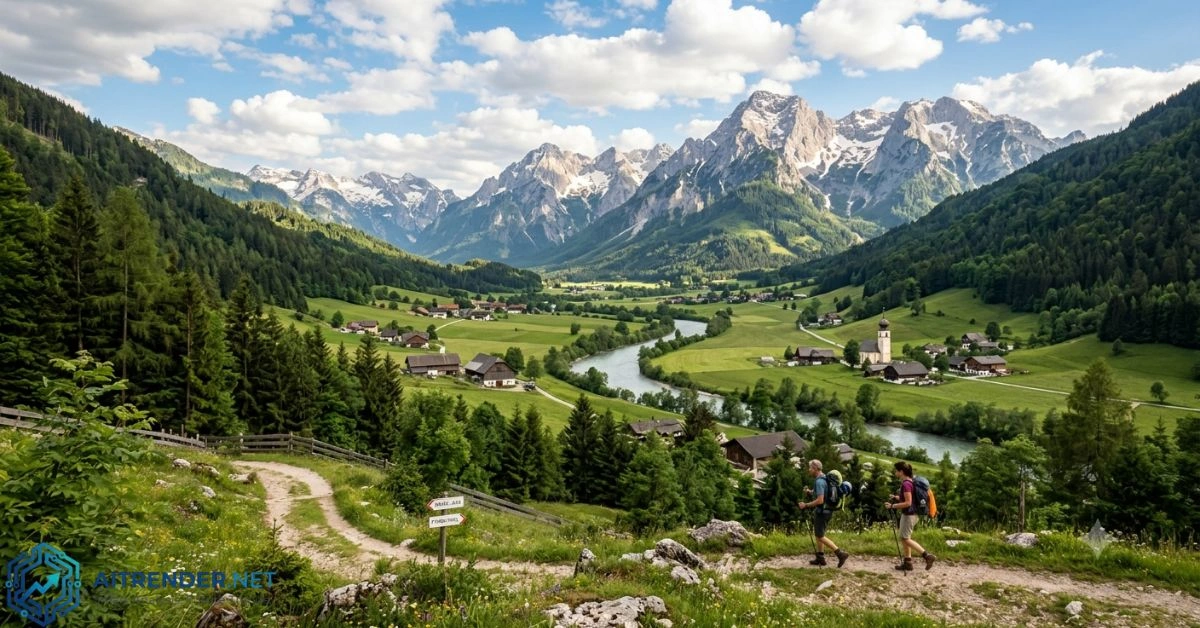
Enntal sits quietly in the Austrian Alps, offering a mix of dramatic landscapes, layered history, and accessible outdoor experiences that draw people who want more than crowded tourist spots. If you’re planning a trip or simply curious about lesser-known European destinations, this valley delivers real substance without the hype.
Geography and Natural Features
The Enntal valley stretches through Upper Austria, framed by the Ennstal Alps and parts of the Dead Mountains (Totes Gebirge). Steep limestone peaks rise sharply from green valley floors, with the Enns River carving its path through the terrain. Elevations range from around 600 meters in the lower sections to over 2,000 meters on surrounding summits like the Großer Pyhrgas or Haller Mauern.
Seasons shape the experience dramatically. Spring brings melting snow and wildflower meadows. Summer offers stable weather for longer hikes. Autumn paints the forests in vibrant colors, and winter turns the area into a quieter snow-covered retreat. The microclimate varies by elevation—valley floors stay milder while higher ridges can see rapid weather shifts, including afternoon thunderstorms in summer.
Forests here mix beech, spruce, and larch. Clear streams feed into the Enns, supporting local ecosystems. Wildlife includes chamois, deer, marmots, and various bird species. The area feels intimate compared to larger Alpine regions like the Tyrol, giving visitors more space to breathe.
Historical Background
Human presence in Enntal dates back to prehistoric times, with evidence of early settlements along trade routes through the Alps. Roman influence left traces in roads and artifacts, as the valley served as a connection point between regions. Medieval periods saw the rise of local lordships, fortifications, and agricultural communities that shaped the cultural landscape still visible today.
Several villages and small towns dot the valley, each with its own character. Historic farmhouses, churches, and remnants of old trade paths tell stories of resilience through harsh winters and economic shifts. Unlike more commercialized Alpine areas, Enntal retains a working rural character alongside tourism.
Local museums and heritage sites provide context without overwhelming visitors. Guided walks or self-exploration of marked historical trails help connect the dots between landscape and human stories. The region’s role in broader Austrian history ties into events like regional conflicts and post-war recovery, though it never became a major battlefield.
Outdoor Activities and Adventures
Hiking stands out as the primary draw. Trails range from easy valley walks to demanding summit routes. The Pyhrn-Priel region offers well-maintained paths with clear signage. Popular options include routes to Hoher Nock or circuits around alpine lakes.
For families or casual walkers, flat paths along the Enns River provide scenic, low-effort options with benches and viewpoints. Intermediate hikers tackle forested ascents with rewarding panoramas. Experienced mountaineers find technical challenges on exposed ridges, requiring proper gear and weather awareness.
Cycling appeals to many. Road cyclists enjoy winding valley roads with moderate traffic, while mountain bikers access dedicated trails. E-bike rentals make steeper sections more approachable for a wider audience.
Winter activities center on cross-country skiing and snowshoeing rather than massive downhill resorts. Smaller ski areas nearby cater to locals and day-trippers seeking uncrowded slopes. Ice climbing and winter hiking add variety for those prepared for cold conditions.
Other options include:
- Kayaking or rafting on sections of the Enns during higher water periods.
- Wildlife observation with binoculars and patience.
- Paragliding from select launch points for experienced pilots.
- Foraging tours in season, focusing on mushrooms and herbs under local guidance.
Always check local conditions and consider hiring guides for less familiar routes, especially in shoulder seasons.
Local Culture, Cuisine, and Traditions
Austrian Alpine culture thrives here through food, festivals, and daily life. Traditional dishes emphasize local ingredients: fresh dairy, game meats, root vegetables, and hearty breads. Kaiserschmarrn remains a favorite— a sweet, caramelized pancake often paired with apple compote or lingonberries. Other staples include Kasnocken (cheese dumplings), various sausages, and wild herb-infused specialties.
Restaurants range from simple guesthouses serving home-style meals to establishments highlighting regional wines and beers. Many source produce directly from nearby farms, reflecting a farm-to-table approach that predates the modern trend.
Festivals punctuate the calendar. Harvest celebrations, music events, and religious traditions bring communities together. Summer brings open-air concerts and markets, while Christmas markets in smaller villages offer a more intimate experience than big-city versions.
Architecture features wooden chalets, sturdy stone buildings, and churches with characteristic onion domes. Local crafts include woodworking and textile work. Visitors can often meet artisans through workshops or farm stays.
Where to Stay and Practical Travel Tips
Accommodations suit different budgets and preferences. Family-run Gasthöfe provide authentic experiences with hearty breakfasts and local advice. Hotels in larger valley settlements offer more amenities, including spas that capitalize on the relaxing mountain setting. For immersion, consider mountain huts (Hütten) for multi-day hikes or camping at designated sites.
Booking ahead matters during peak summer and holiday periods, though the area sees fewer crowds than Salzburg or Innsbruck. Many places offer half-board options that include dinner, simplifying meal planning.
Getting There:
- Fly into Linz, Salzburg, or Vienna, then rent a car or use regional trains and buses.
- Public transport works well for valley exploration but becomes limited for remote trailheads.
- A car provides the most flexibility, especially for spontaneous stops.
Best Time to Visit: Late May through September for hiking. December to March for winter activities. Shoulder months (April, October) bring fewer people and lower rates, though some services may operate on reduced schedules.
Packing Essentials: Layered clothing, sturdy hiking boots, rain jacket, sun protection, and a good map or offline GPS app. Respect trail rules and Leave No Trace principles to preserve the environment.
Comparison of Enntal with Nearby Alpine Destinations
| Aspect | Enntal | Salzkammergut | Tyrolean Alps |
| Crowd Levels | Low to moderate | High in peak season | Very high |
| Hiking Variety | Excellent trails, varied difficulty | Scenic but busier paths | Extensive, more technical |
| Cultural Immersion | Strong local/rural feel | Historic towns, Hallstatt focus | Mix of tradition and tourism |
| Accommodation Cost | Affordable to mid-range | Higher in popular spots | Premium options dominant |
| Accessibility | Good via regional transport | Excellent | Excellent but congested |
| Winter Activities | Cross-country, small ski areas | Lakeside winter charm | World-class resorts |
This table highlights why Enntal appeals to those seeking authenticity over infrastructure.
Sustainability and Responsible Travel
The valley’s communities increasingly focus on sustainable tourism. Many operators emphasize low-impact practices, from eco-friendly accommodations to trail maintenance by local volunteers. Visitors can support this by choosing businesses with environmental certifications, using public transport where possible, and buying directly from producers.
Challenges include balancing visitor numbers with preservation. Seasonal fluctuations in tourism affect local economies, making year-round respectful practices important. Simple actions like staying on marked trails and proper waste disposal make a difference in sensitive alpine ecosystems.
Enntal in 2026: What’s New and Evolving
Infrastructure improvements continue, with better trail connections and digital resources for visitors, such as updated apps for real-time weather and route information. Community initiatives aim to promote lesser-known cultural sites and support local businesses amid broader tourism recovery.
For those interested in broader European travel trends, Enntal offers a contrast to high-volume destinations. Pairing a visit here with insights from other niche spots can enrich planning.
If you’re exploring digital tools or content platforms for trip research, resources like detailed streaming site reviews can help with offline entertainment options during travel. Similarly, following sports analyses, such as NFL draft breakdowns, adds another layer of engaging content for downtime.
Health, Safety, and Accessibility Considerations
Mountain environments require preparation. Altitude awareness, hydration, and sun protection matter even on moderate hikes. Emergency services operate efficiently, but response times vary in remote areas—carry a charged phone and inform someone of your plans.
Accessibility improves gradually, with some trails and facilities adapted for mobility needs. Check specific locations in advance. Families with children benefit from easier valley paths and educational nature programs.
Why Enntal Matters for Modern Travelers
In an era of overtourism, places like Enntal remind us that meaningful experiences often hide in plain sight. The valley doesn’t chase trends—it offers consistent natural beauty, genuine hospitality, and space for personal reflection or active exploration. Whether you’re a solo hiker, a family seeking nature time, or a couple looking for quiet romance, the area adapts without losing its core character.
Its scale encourages slower travel. Spend days wandering trails, evenings enjoying local food, and mornings absorbing the quiet. Many visitors return because the place feels restorative rather than exhausting.
FAQS
1. What exactly is Enntal?
Enntal refers primarily to a scenic valley region in the Austrian Alps known for its natural beauty, hiking opportunities, and traditional culture.
2. Is Enntal a good destination for first-time Alpine visitors?
Yes. Its mix of easy and challenging activities, combined with manageable crowds, makes it approachable while still offering authentic experiences.
3. When is the best time to hike in Enntal?
Late spring to early autumn provides the most reliable conditions for most trails. Always check current weather and trail status.
4. Are there family-friendly activities in Enntal?
Absolutely. Gentle riverside walks, wildlife spotting, and some educational programs suit children well. Many accommodations welcome families.
5. How does Enntal compare to more famous Austrian destinations?
It offers similar Alpine scenery with significantly fewer crowds and a stronger emphasis on local, rural life.
6. What should I eat in Enntal?
Focus on regional specialties like Kaiserschmarrn, cheese-based dishes, and fresh baked goods. Many spots highlight seasonal and local sourcing.
7. Is public transportation sufficient for getting around Enntal?
It works for main valley areas but a car is recommended for full flexibility, especially trailheads.
8. Does Enntal have good options for winter travel?
Yes, particularly for cross-country skiing, snowshoeing, and relaxed mountain stays away from large ski circus crowds.
This guide draws together practical details to help you plan effectively. Enntal rewards those who approach it with curiosity and respect for its rhythms. Pack your boots, leave room for spontaneity, and enjoy one of Austria’s quieter treasures.
For More Information Visit Aitrender.