



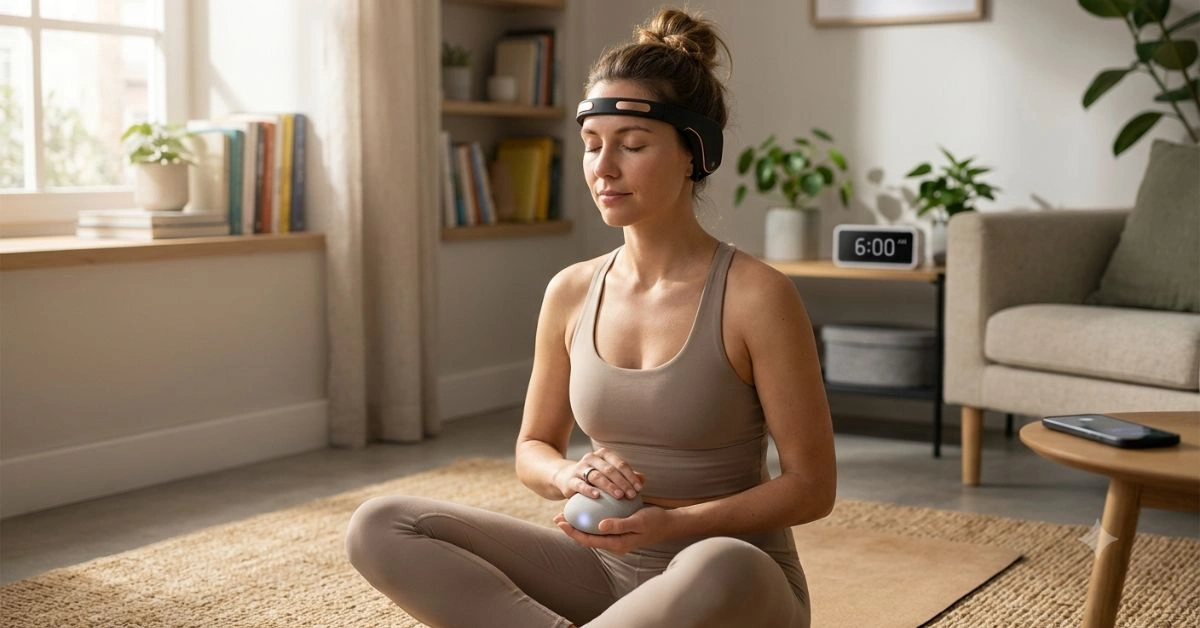
You sit down to meditate. Five minutes later, your mind has wandered to your inbox, dinner plans, and that awkward conversation from yesterday. Sound familiar? Millions face the same struggle. Meditation gadgets change that by giving real-time feedback, gentle guidance, and measurable progress.
These devices don’t replace the core practice. They remove common barriers for beginners and help experienced meditators go deeper. Whether you’re dealing with high stress, poor sleep, or inconsistent habits, the right tool can make a noticeable difference.
Why Meditation Gadgets Work in a Distracted World
Modern life pulls attention in every direction. Notifications, endless scrolling, and constant demands make quiet focus rare. Gadgets bridge that gap with biofeedback and structured support.
They track brainwaves, heart rate variability (HRV), breathing patterns, or body movements. Immediate cues—like sounds, vibrations, or app visuals—tell you when you’re on track and when your mind drifts. This turns abstract effort into concrete skill-building.
Research and user reports show benefits in reduced anxiety, better sleep, and improved focus. Devices provide accountability that many solo practices lack. You see data after sessions: calmer states achieved, streaks maintained, progress over weeks.
Key advantage: They make practice engaging. Birds chirp louder as you deepen calm in one popular headband. Gentle vibrations prompt breath resets in a ring. These elements turn routine into something you look forward to.
That said, not every gadget delivers. Some feel gimmicky. The best ones use solid sensors, pair with thoughtful apps, and respect the human side of mindfulness.
Types of Meditation Gadgets Explained
EEG Headbands: Brainwave Feedback for Deeper Calm
EEG headbands like the Muse series sit across your forehead and behind your ears. Sensors detect brain activity in real time. The app translates this into audio cues—storms calm to gentle rain or birds as focus improves.
You hear and see your mental state shift. Wandering thoughts trigger feedback that brings you back gently. Many users report faster entry into meditative states and better awareness of subtle mind shifts.
These shine for people who want quantifiable mental fitness. Sessions track calmness percentage, focus scores, and recovery metrics. Sleep tracking on advanced models adds value for nighttime use.
Drawbacks include fit issues for some head shapes and a learning curve. Premium versions offer more guided content and AI coaching.
Smart Rings: Subtle, All-Day Mindfulness Support
Smart rings provide passive tracking and occasional prompts without constant screen time. Devices like the Pulse mindfulness ring use vibrations for breath reminders or focus cues throughout the day.
They monitor HRV, sleep, and activity discreetly. Some include dedicated meditation modes with vibration-guided sessions—no headphones needed. This fits busy lifestyles where a headband feels intrusive.
Rings excel at building habits outside formal sessions. A quick vibration during a stressful meeting reminds you to pause and breathe. Long-term data reveals patterns in stress and recovery.
Comfort and battery life matter here. Premium builds feel solid and durable, much like the structural integrity of high-grade STE500 steel plates used in demanding applications—their strength and reliability under pressure mirror what you want in a daily wearable that withstands real life.
Breath Coaches and Handheld Trainers: Simple Respiratory Guidance
Devices like Moonbird or Hyperice Core focus on breathing. They expand and contract in your hand, guiding paced inhales and exhales. Sensors track coherence or calmness via heart metrics.
These suit beginners overwhelmed by mental techniques. Physical feedback makes breathing exercises tangible. Many include guided audio and progress tracking.
Portability stands out—they’re TSA-friendly and easy to use anywhere. Sessions often feel relaxing quickly, ideal for anxiety spikes or pre-sleep routines.
Other Categories
- PEMF and neurostimulation devices: Use electromagnetic fields for brain state support.
- Sound and light machines: Combine audio and visuals for immersive experiences.
- Wearable patches or straps: Offer targeted biofeedback.
Detailed Comparison of Meditation Gadgets
Here’s a practical side-by-side look at major categories based on real user experiences and specs as of 2026.
| Type | Price Range | Key Technology | Best For | Battery Life | Potential Drawbacks |
| EEG Headbands (e.g., Muse S) | $250–$500 | EEG sensors, heart rate, motion | Beginners building focus, sleep tracking | 8–20 hours | Fit sensitivity, subscription for full features |
| Smart Rings (e.g., Pulse, Oura-style) | $150–$400 | HRV, vibrations, discreet sensors | All-day habit building, busy professionals | 4–7 days | Less immersive feedback, sizing issues |
| Breath Coaches (e.g., Moonbird, Core) | $100–$250 | Haptic breathing guidance, ECG/HRV | Quick stress relief, travel, beginners | 1–2 weeks | Limited to breath focus, less brain data |
| PEMF/Neurostim (e.g., NeoRhythm) | $200–$450 | Pulsed electromagnetic fields | Deeper states, sleep, focus training | Varies | Emerging tech, variable results |
This table highlights trade-offs. Choose based on your primary goal—intense sessions, daily integration, or simple entry points.
How to Choose the Right Meditation Gadget for You
Start with your biggest pain point. Struggling with mind wandering? Prioritize EEG feedback. Need portable calm during commutes? Grab a breath coach. Want seamless daily integration? Consider a ring.
Budget considerations: Entry-level options deliver solid value. Invest more for accuracy, comfort, and longevity.
Comfort and ease of use matter most. Test fit if possible. Read recent reviews—tech improves yearly.
The app ecosystem is crucial. Look for intuitive interfaces, useful insights, and community or guided content.
Integration with existing habits helps. Some sync with phones, watches, or broader health apps.
Real Benefits Backed by Experience
Users consistently report:
- Faster habit formation: Feedback makes progress visible and motivating.
- Deeper sessions: Cues help sustain attention longer.
- Better stress management: Objective data shows what works for your body.
- Improved sleep: Many devices double as trackers.
- Quantifiable growth: Weekly summaries reveal trends.
One practitioner switched from sporadic apps to a headband and doubled consistent practice time within a month. Another used a breath device during work breaks and noticed lower afternoon anxiety.
Results vary. Pair gadgets with traditional techniques for best outcomes. They accelerate learning but don’t do the work for you.
Integrating Gadgets Without Losing the Human Touch
Technology supports, but mindfulness remains personal. Use devices for learning phases, then fade reliance as skills strengthen.
Combine with unplugged sessions. Alternate gadget-guided practice with silent sitting to build internal awareness.
Set clear intentions. Decide if you’re training focus, reducing stress, or exploring states. Match the tool to the goal.
Mindful tech balance matters. While some binge digital entertainment like IPTV services for passive relaxation, meditation gadgets encourage active participation in your mental health. They shift you from consumer to practitioner.
Maintenance, Care, and Long-Term Value
Clean sensors regularly according to manufacturer guidelines. Store properly to protect electronics.
Update apps and firmware for new features and accuracy improvements.
Battery health declines over time. Factor replacement costs into decisions.
Many devices offer warranties and responsive support. Premium builds last longer.
Track your own metrics beyond the gadget—journal mood, energy, and sleep alongside device data for a fuller picture.
Common Challenges and How to Overcome Them
Initial setup frustration: Follow tutorials patiently. Most improve after a few uses.
Data overload: Start with basic metrics. Ignore advanced stats until comfortable.
Dependency fears: Schedule device-free days. Use insights to inform unassisted practice.
Fit or comfort issues: Experiment with positioning or contact gel if recommended.
Motivation dips: Set small goals, celebrate streaks, and vary sessions.
The Future of Meditation Technology
Expect tighter integration with AI for personalized coaching. More comfortable, accurate sensors. Seamless multi-device ecosystems.
Advances in non-invasive brain interfaces could deepen experiences. Focus remains on accessible, evidence-informed tools rather than hype.
FAQS: Your Top Questions About Meditation Gadgets Answered
1. Do meditation gadgets really work, or are they just expensive gimmicks?
They work for many by providing biofeedback that accelerates learning. Studies and user reports support benefits for focus, stress, and sleep when used consistently. Results depend on your effort.
2. Are EEG headbands worth the price?
For people serious about building a practice, yes. Real-time brain feedback offers insights hard to get otherwise. Start with core features before subscriptions.
3. Can smart rings replace dedicated meditation devices?
They complement well for daily mindfulness. Great for subtle cues and tracking, but less immersive than headbands for deep sessions.
4. How long until I see benefits?
Many notice calmer sessions within 1-2 weeks. Deeper habit changes take 4-8 weeks of regular use.
5. Are these gadgets safe?
Reputable ones use established, non-invasive sensors. Follow instructions. Consult doctors for specific health conditions.
6. What’s the best budget option?
Breath coaches often provide strong value under $150. Free apps with basic wearables work as entry points.
7. Do I need a subscription?
Basic functionality usually works without one. Premium unlocks more content and analytics—try first.
8. How do they compare to meditation apps alone?
Gadgets add physiological data and feedback apps can’t provide. Many pair both for best results.
Final Thoughts on Embracing Meditation Gadgets
These tools represent a practical evolution in mindfulness. They meet you where you are—busy, distracted, or curious—and help build sustainable practice.
Experiment thoughtfully. Track what resonates. The goal stays the same: greater presence, calm, and self-understanding.
Start small. One device, consistent short sessions, honest reflection. Technology helps, but your commitment drives change.
The path to a calmer mind has never been more supported. Pick a tool that fits your life and begin.
For More Information Visit Aitrender.