



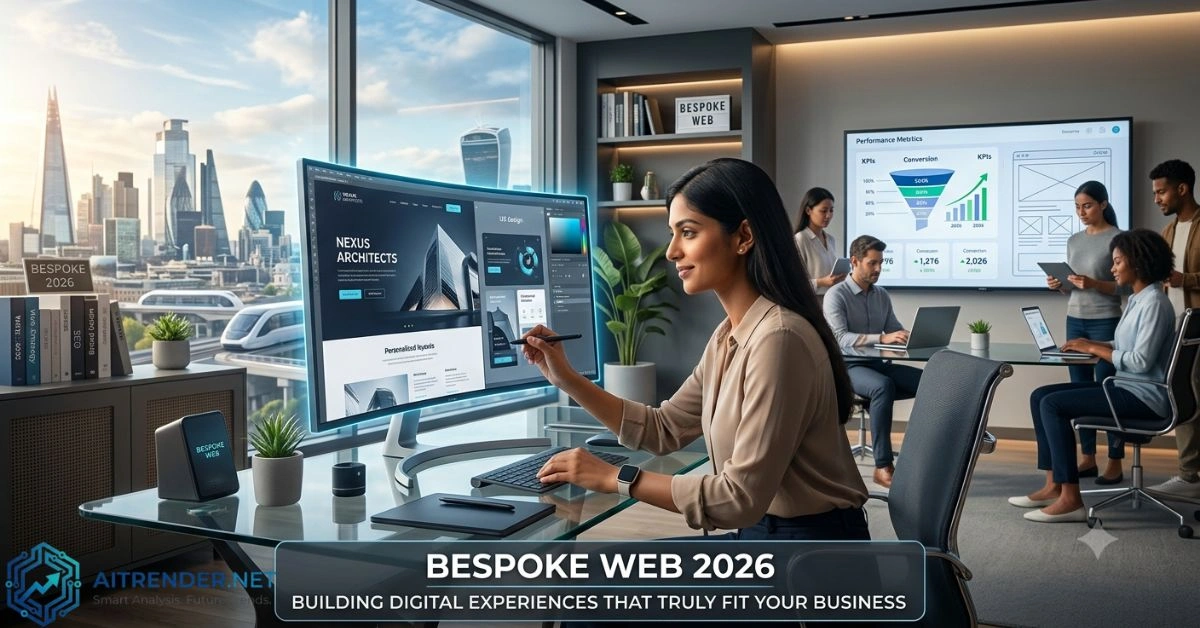
Businesses today face a crowded online world where standing out requires more than a functional site. A bespoke web solution creates a website shaped exactly to your brand, audience, and goals. Unlike off-the-shelf templates, these custom builds adapt to specific needs and evolve with your company.
This guide breaks down everything you need to know about bespoke web development. You will see clear differences from standard options, the step-by-step process, key benefits, and practical ways to make it work for your industry.
What Does Bespoke Web Actually Mean?
Bespoke web refers to websites designed and built from the ground up for one specific client. Every element — from layout and navigation to backend functionality and integrations — gets crafted to match exact requirements rather than forcing content into a pre-made framework.
Think of it like ordering a custom suit instead of buying one from the rack. The tailor measures you, selects fabrics that suit your style and lifestyle, and adjusts every detail. The result feels personal and performs better over time.
In practice, bespoke web projects often involve:
- Custom user interfaces that reflect your brand identity perfectly
- Tailored features such as unique booking systems, member portals, or e-commerce flows
- Optimized code that loads fast and ranks well in search engines
- Scalable architecture that grows without breaking
This approach contrasts sharply with template-based sites on platforms like WordPress themes, Wix, or Squarespace, where you adapt your needs to existing structures.
Why Businesses Choose Bespoke Web Over Templates
Many companies start with templates because they seem quick and cheap. For simple brochure sites or early-stage startups testing ideas, that works fine. But as ambitions grow, limitations appear quickly.
Performance and Speed Advantages
Custom code lets developers eliminate unnecessary bloat. Templates often load extra scripts, styles, and plugins that slow things down. A bespoke web build focuses only on what you need, resulting in faster load times that improve user experience and SEO rankings.
Google prioritizes speed. Sites that load under two seconds keep visitors engaged. Bespoke projects routinely achieve this through optimized images, efficient databases, and clean architecture.
Better Security and Control
Templates rely on third-party plugins that need constant updates. A vulnerability in one popular plugin can expose thousands of sites. Custom development gives you full control over security measures tailored to your risk profile, especially important for industries handling sensitive data like finance or healthcare.
True Brand Differentiation
Your website becomes a powerful extension of your brand rather than looking like everyone else in your sector. Custom illustrations, unique interactions, and thoughtful details create memorable experiences that templates simply cannot replicate.
Long-Term Cost Efficiency
While upfront investment is higher, bespoke web often proves cheaper over years. You avoid repeated template redesigns, expensive plugin subscriptions, and workarounds that waste developer time. Maintenance stays straightforward because the code was written specifically for you.
The Bespoke Web Development Process Step by Step
Creating a successful bespoke website follows a structured yet flexible process. Good agencies treat it as a collaboration, not a one-way handover.
1. Discovery and Strategy Phase
This foundation stage involves deep dives into your business:
- Understanding target audience behaviors and pain points
- Analyzing competitors’ strengths and weaknesses
- Defining clear goals — whether lead generation, sales, or community building
- Mapping user journeys and technical requirements
Expect workshops, stakeholder interviews, and detailed documentation. This phase prevents costly changes later.
2. Information Architecture and Wireframing
Designers create site maps and low-fidelity wireframes. These focus on structure and flow before visual polish. You review navigation logic and content placement to ensure intuitive experiences.
3. Visual Design and Prototyping
High-fidelity mockups bring your brand to life. Modern bespoke web incorporates 2026 trends like bold typography, micro-animations, dark mode options, and interactive elements while staying true to your identity.
Interactive prototypes let you click through the site and provide feedback before any code gets written.
4. Development and Technical Build
Frontend and backend teams work in parallel:
- Developers code responsive, accessible interfaces
- Backend specialists build custom databases, APIs, and integrations
- Security experts implement robust protections
Testing happens continuously with automated tools and real user feedback.
5. Content Integration, Testing, and Launch
Writers and SEO specialists optimize every page. Rigorous testing covers devices, browsers, accessibility standards, and edge cases. After final approvals, the site launches with monitoring tools in place.
6. Ongoing Support and Iteration
Bespoke web does not end at launch. Regular updates, performance monitoring, and feature additions keep the site fresh and effective.
Key Benefits That Drive Real Results
Companies investing in bespoke web report measurable improvements across metrics.
Enhanced User Experience: Tailored navigation and personalized elements reduce bounce rates. Visitors find what they need faster and convert more often.
Superior SEO Performance: Clean code, proper schema markup, and fast loading give search engines clear signals. Custom content structures help rank for competitive terms.
Scalability Without Limits: As your business grows, the site adapts. Need a new membership tier or complex analytics dashboard? Developers build it seamlessly instead of fighting template constraints.
Data Ownership and Insights: Full control over your data and analytics means better decision-making without relying on platform limitations.
Accessibility Compliance: Custom builds meet WCAG standards more thoroughly, opening your site to wider audiences and reducing legal risks.
Industries That Thrive With Bespoke Web Solutions
Certain sectors gain particular advantages from custom development.
E-commerce and Retail: Unique product configurators, advanced filtering, and personalized shopping experiences boost sales. Custom recommendation engines increase average order value significantly.
Healthcare and Professional Services: Secure patient portals, appointment systems, and compliant information architecture protect sensitive data while delivering excellent care.
Entertainment and Media: Streaming platforms and content hubs need robust video handling, user accounts, and recommendation systems. For example, specialized sites in this space often require custom streaming capabilities — check out this detailed HydraHD RU streaming site review guide for insights into what tailored media platforms can achieve.
Sports and Fan Engagement: Teams and leagues build immersive experiences with live updates, ticketing, and community features. A prime illustration comes from NFL analysis sites that use custom data visualizations and real-time elements, such as breakdowns of key Eagles rookie trade Makai Lemon 2026 draft analysis pages that engage fans deeply through interactive content.
Travel and Hospitality: Dynamic booking engines, personalized itineraries, and multilingual support create seamless customer journeys.
Finance and SaaS: Complex dashboards, secure transactions, and compliance tools demand the precision only bespoke development provides.
Bespoke Web vs Template Websites: A Detailed Comparison
| Aspect | Bespoke Web | Template Websites |
| Customization | Complete flexibility | Limited to theme options |
| Performance | Optimized for your needs | Often bloated with extras |
| Development Time | 3-6+ months | Days to weeks |
| Initial Cost | Higher | Lower |
| Long-term Maintenance | Predictable and efficient | Plugin updates and workarounds |
| SEO Potential | Excellent control | Good but constrained |
| Scalability | Designed to grow | Hits limits quickly |
| Brand Uniqueness | Truly distinctive | Similar to competitors |
| Security | Tailored protections | Relies on third-party patches |
This table highlights why growing businesses eventually move beyond templates.
Current and Emerging Trends Shaping Bespoke Web in 2026
The field continues evolving rapidly. Successful bespoke projects incorporate these elements thoughtfully rather than chasing every trend.
AI-powered personalization creates dynamic experiences that adapt to individual users without sacrificing privacy. Motion design and micro-interactions add delight while guiding attention. Sustainable web practices — efficient code, optimized assets, and green hosting — appeal to conscious consumers.
3D elements and immersive interfaces work well when they serve clear purposes, such as product visualization. Voice interfaces and conversational elements improve accessibility. Dark mode and adaptive color schemes respect user preferences and reduce eye strain.
The best bespoke web work balances innovation with timeless usability. Trends should enhance your goals, not distract from them.
How to Choose the Right Bespoke Web Partner
Not all agencies deliver equal results. Look for these signs:
- Strong portfolio of similar projects with measurable outcomes
- Transparent process and clear communication
- Technical expertise across modern stacks (React, Next.js, Node, headless CMS, etc.)
- Focus on strategy, not just pretty designs
- Post-launch support and training included
Ask for case studies, client references, and detailed proposals. Understand their approach to ongoing maintenance and how they handle changes.
Budget realistically. Quality bespoke web represents an investment that pays dividends through higher conversions, stronger branding, and reduced future costs.
Common Challenges and How to Overcome Them
Scope creep can inflate timelines and budgets. Combat it with detailed requirements and change management processes.
Finding the right talent matters. Established agencies maintain teams experienced in custom work.
Integration with existing systems requires careful planning. Good partners audit your tech stack early.
User adoption improves when you involve stakeholders and conduct thorough testing throughout.
Measuring Success After Launch
Track key performance indicators tied to your original goals:
- Conversion rates and revenue
- Bounce rates and time on site
- Organic search traffic and rankings
- User feedback and Net Promoter Scores
- Technical metrics like Core Web Vitals
Regular audits and iterative improvements keep your bespoke web asset performing at its peak.
FAQs About Bespoke Web
1. How much does a bespoke website cost?
Prices vary widely based on complexity, but expect $15,000 to $100,000+ for professional results. Simple custom sites start lower while enterprise solutions with advanced features cost more. Focus on ROI rather than just sticker price.
2. How long does it take to build?
Most projects take 3 to 8 months from kickoff to launch. Discovery and design phases take longer in complex cases, but the investment in planning saves time later.
3. Is a bespoke web worth it for small businesses?
It depends on your goals. If you need a basic online presence, templates work well initially. Once you require unique features, better performance, or stronger branding, custom development becomes the smarter move.
4. Can I update a bespoke website myself?
Yes. Modern approaches use headless CMS platforms that let non-technical users manage content easily while developers maintain the custom framework.
5. What technologies do bespoke web projects use?
Teams select tools based on needs. Popular choices include React or Vue for interfaces, Node.js or Laravel for backend, and headless CMS like Sanity or Contentful for content management.
6. How does bespoke web impact SEO?
Positively when done right. Clean code, fast performance, proper structure, and custom schema markup give significant advantages over template sites filled with duplicate patterns.
7. What maintenance does a bespoke site require?
Ongoing support covers security updates, performance monitoring, content refreshes, and occasional feature additions. Most agencies offer monthly or quarterly retainers.
Bespoke web represents more than a website — it becomes a strategic business asset built to last and grow with you. By investing in a solution tailored precisely to your needs, you create digital experiences that drive results and set you apart from the competition.
Whether you operate in entertainment, sports, retail, or professional services, the principles remain the same: understand your audience deeply, build with intention, and never settle for generic when unique serves you better.
For More Information Visit Aitrender.