



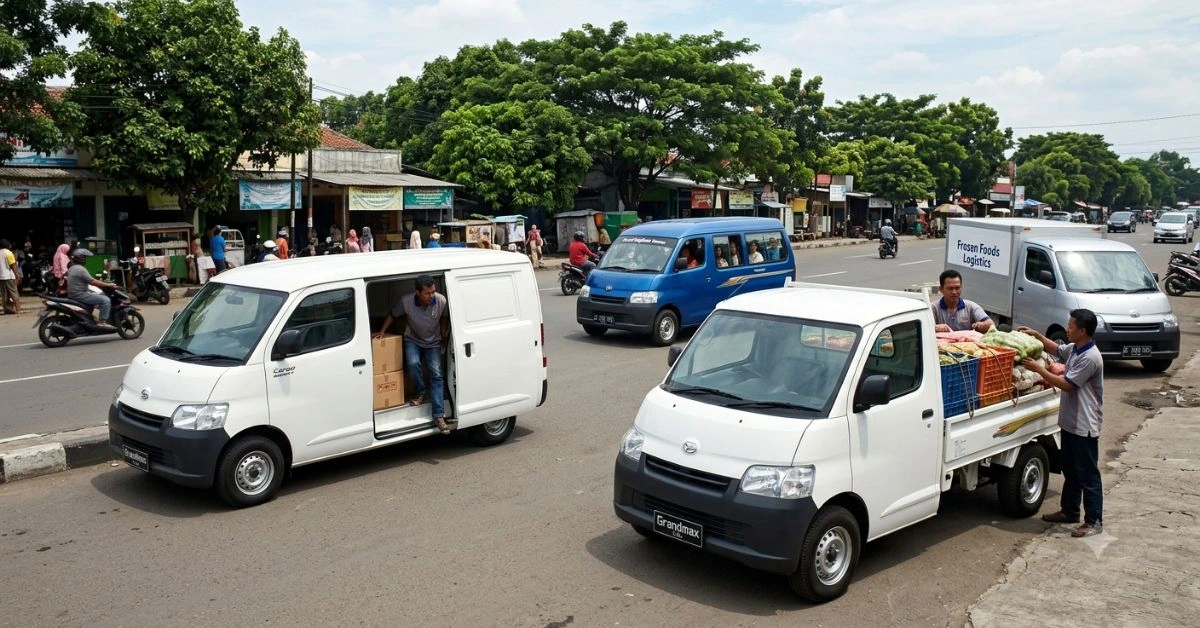
The Grandmax, officially known as the Daihatsu Gran Max, has carved out a solid reputation as one of the most dependable light commercial vehicles in emerging markets. Whether you’re running a small delivery business, managing a fleet, or simply need a tough daily driver that can haul serious loads without breaking the bank, this vehicle delivers where it counts. Launched in late 2007, it quickly replaced older models like the Daihatsu Zebra in Indonesia and has since expanded across Southeast Asia, Japan, and beyond.
Drivers and fleet operators appreciate its straightforward design, strong payload capacity, and low running costs. In Indonesia, it became a go-to choice almost immediately after release, with strong monthly sales from the start. Today, variants serve as panel vans, pickups, minibuses, and specialized cargo haulers. Its semi-cabover layout maximizes interior and cargo space while keeping dimensions compact enough for tight city streets.
This guide covers the full story—from origins and technical details to real-user experiences, maintenance tips, and how it stacks up against competitors. If you’re researching your next work vehicle, you’ll find clear answers here.
History and Development of the Grandmax
Daihatsu developed the Gran Max under chief engineer Masaharu Tezeni to address the needs of commercial users who wanted more space and capability than traditional kei trucks offered. It debuted in Indonesia in November 2007 as a direct successor to the Zebra, offering a wider and longer body than the smaller Hijet models.
The design team, including Toshiaki Okamoto and Kenyuu Uehata, focused on a front mid-engine layout. Positioning the engine under the front seats improves weight distribution and creates a flat, usable cargo floor. This “semi-cab” approach gives better stability when loaded compared to more extreme cabover designs.
Production happens primarily at Astra Daihatsu Motor in Indonesia. This setup keeps costs competitive while allowing customization for different regional requirements. By 2008, Toyota began selling rebadged versions as the LiteAce and TownAce in Japan and other markets. In 2020, Mazda joined with its Bongo version for the Japanese market, replacing older locally built models.
Updates over the years have been practical rather than flashy. Early models used 1.3L and 1.5L engines. Later facelifts introduced newer powertrains for better efficiency and emissions compliance, plus small comfort and safety improvements like electric power steering and updated wheels.
The name “Gran Max” combines “grand” and “maximum,” signaling its focus on big capability in a compact package. That philosophy has held steady for nearly two decades.
Key Specifications and Technical Details
The Grandmax uses a simple, proven mechanical layout that prioritizes durability and ease of repair over complexity.
Dimensions (approximate, varies by body style):
- Wheelbase: 2,650 mm
- Length: 4,045–4,065 mm (vans/cargo), 4,195–4,295 mm (pickups)
- Width: Around 1,665–1,675 mm
- Height: 1,850–1,930 mm (higher on some truck variants)
- Ground clearance: 165–190 mm
- Turning radius: About 4.9 meters — excellent for urban maneuvering.
Engines:
- 1.3L K3-DE (DOHC): 65 kW (88 PS), 115 Nm torque. Reliable base option for lighter duties.
- 1.5L 3SZ-VE (earlier VVT-i): Around 71 kW (97 PS), 134 Nm.
- 1.5L 2NR-VE (current Dual VVT-i, aluminum block): Similar output but cleaner and more efficient. Delivers strong low-end torque for loaded starts.
Transmissions include a 5-speed manual (most common for efficiency and durability) and 4-speed automatic on select models. Rear-wheel drive is standard, with optional 4WD in some Japanese versions.
Payload capacity shines here: up to 750–800 kg or more depending on configuration. Fuel economy typically ranges from 11–13 km/L in mixed conditions, making it affordable for daily commercial use. The 43-liter tank provides decent range.
Suspension is straightforward—leaf springs at the rear for heavy loads and MacPherson struts up front. Brakes include discs up front and drums in back, with ABS and EBD on higher trims.
These specs make the Grandmax feel planted when carrying weight, yet nimble empty.
Variants and Body Styles
The Grandmax lineup covers multiple needs:
Pickup Truck: Popular for trades and deliveries. Long bed options and configurable sides. Great for construction materials or farm use.
Panel Van / Cargo Van: Enclosed space for protected goods. Sliding side doors and low floor height simplify loading. Blind van versions (no rear windows) suit security-focused operations.
Minibus: Seats up to 9–11 passengers. Used for shuttles, school runs, or small group transport in Indonesia and Malaysia.
Specialized Versions: Box bodies, aluminum cargo, freezer units, and more. In Japan, enhanced Cargo and Truck models target the 1-ton segment with Smart Assist safety tech.
Recent additions include automatic transmission options on certain blind vans and updated safety packages.
This variety explains its broad appeal across small businesses, governments, and individuals.
Performance, Driving Experience, and Fuel Efficiency
Owners consistently praise how the Grandmax drives. The front mid-engine setup and good weight balance deliver stable highway manners even when loaded. The steering feels light thanks to electric power assistance on newer models.
Acceleration is adequate rather than sporty—expect 0-100 km/h in the 15–18 second range depending on load and engine. But in real-world use, the torque delivery helps with overtaking and hill climbs when carrying cargo.
Fuel efficiency stands out for a work vehicle. Manual versions often achieve 12–13 km/L in mixed driving. City stop-and-go traffic drops it to around 10 km/L, while highway runs with light loads push higher numbers. The Dual VVT-i engine in recent models helps here by optimizing valve timing for both power and economy.
Ride quality is firm, as expected with leaf-spring rear suspension, but it smooths out under load. Noise levels stay reasonable at speed, though wind and tire noise become noticeable above 100 km/h.
Maneuverability is a highlight. The tight turning circle lets drivers navigate crowded markets or narrow alleys easily.
Interior, Comfort, and Features
Don’t expect luxury. The cabin prioritizes function. Front seats offer decent space for three adults across in some configs, with the gear lever mounted high on the dashboard to free up floor space.
Storage is limited—basic cupholders and a small glovebox. Higher trims add power windows, air conditioning, basic audio with Bluetooth, and USB ports. Newer Japanese and some export models include touchscreen options and reverse cameras.
The driving position is commanding, good for visibility in traffic. Rear visibility in vans benefits from large mirrors. Build quality feels solid, with hard plastics that resist wear from daily use.
For passengers in minibus versions, space is generous, though legroom in the very back can be tighter on longer trips.
Safety Features and Ratings
Safety has improved gradually. Base models rely on sturdy construction and good brakes. Higher specs add dual front airbags, ABS with EBD, electronic stability control (ESC), and immobilizers. Japanese versions get advanced driver aids like automatic emergency braking and lane departure warnings through Smart Assist.
No full independent crash test ratings like Euro NCAP are widely published for this class of vehicle in all markets, but real-world durability is evident from fleet operators who put hundreds of thousands of kilometers on them with few structural issues.
Always prioritize higher-trim models with modern safety gear if carrying people regularly.
Real-World Owner Experiences and Reviews
Feedback from owners paints a consistent picture: reliable daily workhorse with some trade-offs.
Many Indonesian and Malaysian users highlight low maintenance costs and widespread parts availability. One long-term owner noted solid performance after significant mileage with minimal issues beyond routine servicing.
Common praises include payload capability, fuel economy, and city handling. Drivers appreciate the straightforward mechanics that local workshops can service easily.
Criticisms focus on basic interior, firm ride when empty, and limited cabin storage. Some mention engine noise under hard acceleration and the need for careful loading to maintain balance. Automatic versions can feel a bit sluggish but suit stop-start traffic well.
In South Africa and other export markets, reviewers call it a smart alternative to larger pickups for urban work—cheaper to buy and run while still capable of a full ton.
Fleet managers value the total cost of ownership. Resale holds reasonably well in active commercial markets.
Maintenance, Reliability, and Ownership Costs
The Grandmax earns its keep through simplicity. Regular oil changes, filter replacements, and brake checks cover most needs. The engines have a reputation for longevity when serviced on schedule.
Common parts like belts, hoses, and suspension components are inexpensive and available. Rust protection varies by climate—coastal or humid areas benefit from underbody treatments.
Expect strong reliability if you avoid overloading or neglecting maintenance. Many examples exceed 200,000–300,000 km with original powertrains.
Fuel, insurance, and registration costs stay low compared to larger vans or trucks. This makes it attractive for startups and small operators.
How the Grandmax Compares to Competitors
It competes with models like the Suzuki Carry, older Toyota Hiace variants, and local offerings. The Grandmax often wins on payload, turning radius, and value. Competitors may offer more refinement or features but at higher prices or with smaller load areas.
Against kei trucks, it provides noticeably more space and power. Versus full-size vans, it is more agile and cheaper to operate in dense urban environments.
Its rebadged Toyota and Mazda versions bring brand trust in certain markets while sharing the same strong fundamentals.
Buying Advice: New, Used, or Specific Variant?
Consider your primary use. For pure cargo, go panel van or pickup. Passenger work favors the minibus. Check local emissions rules—newer 2NR-VE models comply better.
When buying used, inspect the frame, suspension, and service history. Test drive loaded if possible. Look for rust, especially in older examples.
New purchases should target recent facelifts with updated engines and safety features. Negotiate based on fleet discounts if buying multiple units.
Factor in aftermarket options like custom boxes or roof racks that expand versatility.
Internal link example: For related tech tools that can help manage your fleet logistics or entertainment systems during long hauls, check out options like those at ifun.
In terms of broader ecosystem analysis or platform features for business security, resources like dachhut can provide additional insights.
Future Outlook for the Grandmax
Daihatsu continues refining the model with efficiency and safety updates. Electrification may appear in coming years as regulations tighten, but the current combustion versions will remain relevant for cost-sensitive markets.
Its proven platform and adaptability suggest a long production life ahead, much like its predecessors.
Frequently Asked Questions (FAQs)
1. What is the Grandmax payload capacity?
Most configurations handle 750–800 kg or more, making it ideal for 1-ton class work in a compact footprint.
2. Is the Daihatsu Gran Max reliable for daily commercial use?
Yes. Owners report high mileage with basic maintenance. Widespread parts support helps keep downtime low.
3. Which engine is better: 1.3L or 1.5L?
The 1.5L offers more torque for heavier loads and highway driving. The 1.3L suffices for lighter duties and slightly better economy in some conditions.
4. Does the Grandmax have automatic transmission options?
Yes, on select newer variants like certain panel vans and blind vans, convenient for city driving.
5. How does fuel economy compare in real world conditions?
Expect 10–13 km/L depending on load, driving style, and transmission. Manuals generally edge out automatics.
6. Is it suitable for passenger transport?
Minibus versions work well for small groups, though basic comfort means it’s best for shorter routes or work shuttles.
7. What safety features does it include?
Varies by trim and market. Look for ABS, airbags, and ESC on modern examples. Japanese versions add advanced assistance systems.
8. How does it handle compared to larger trucks?
Much easier in traffic and parking. The tight turning radius and balanced design make it feel more car-like when unloaded.


: specs, history, variants, real-world performance, pros/cons,)